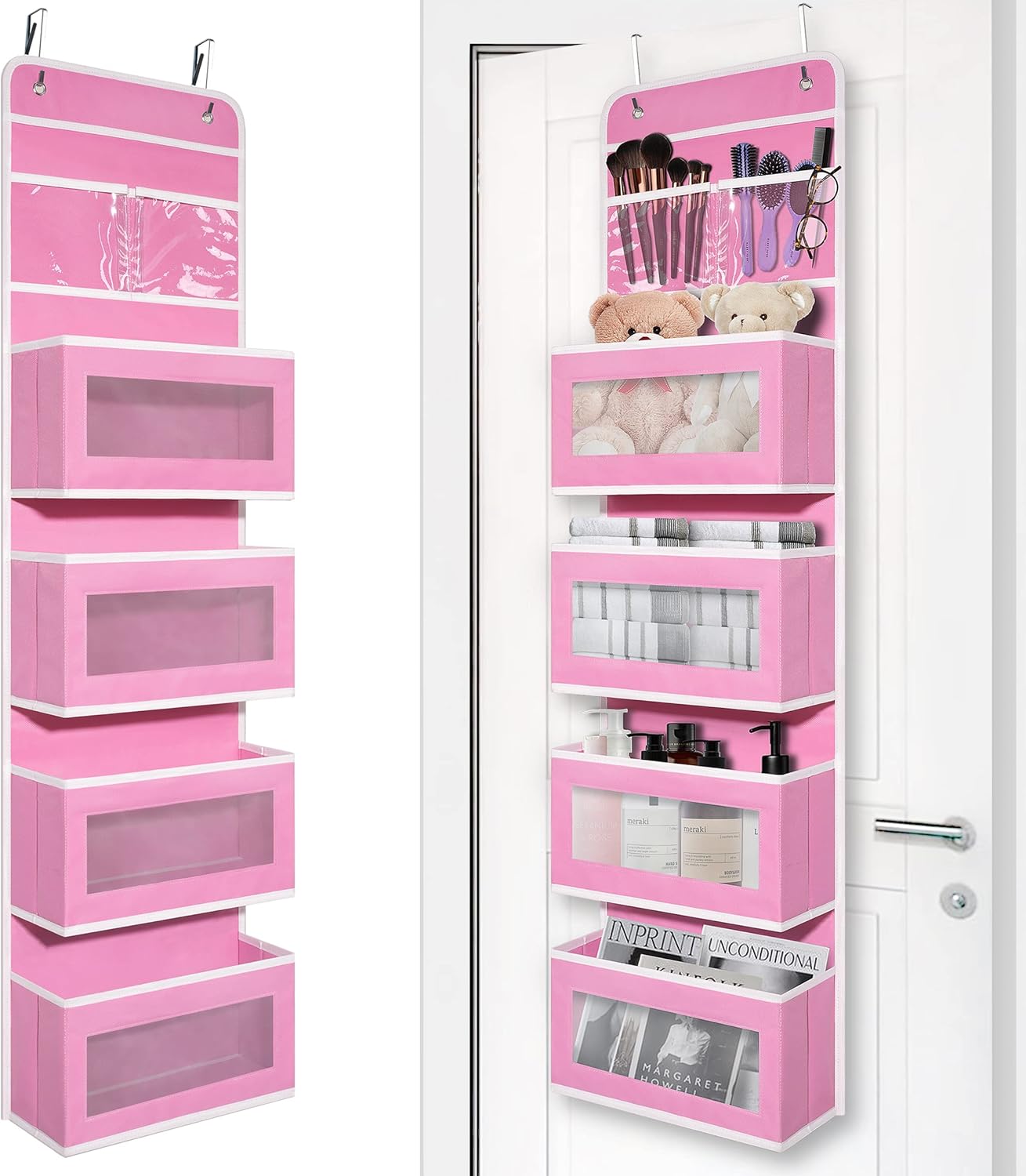
Simple zones
A 4-pocket layout works when the student wants a few broad zones, such as toiletries, snacks, chargers, and closet overflow.
Dorm organizer chooser
Use the table below to match TYMENSH and Giraffe Creation pocket layouts with bathroom items, snacks, chargers, closet overflow, and shared-room storage.
A quick layout match based on storage need.
| If You Need | Compare | Why |
|---|---|---|
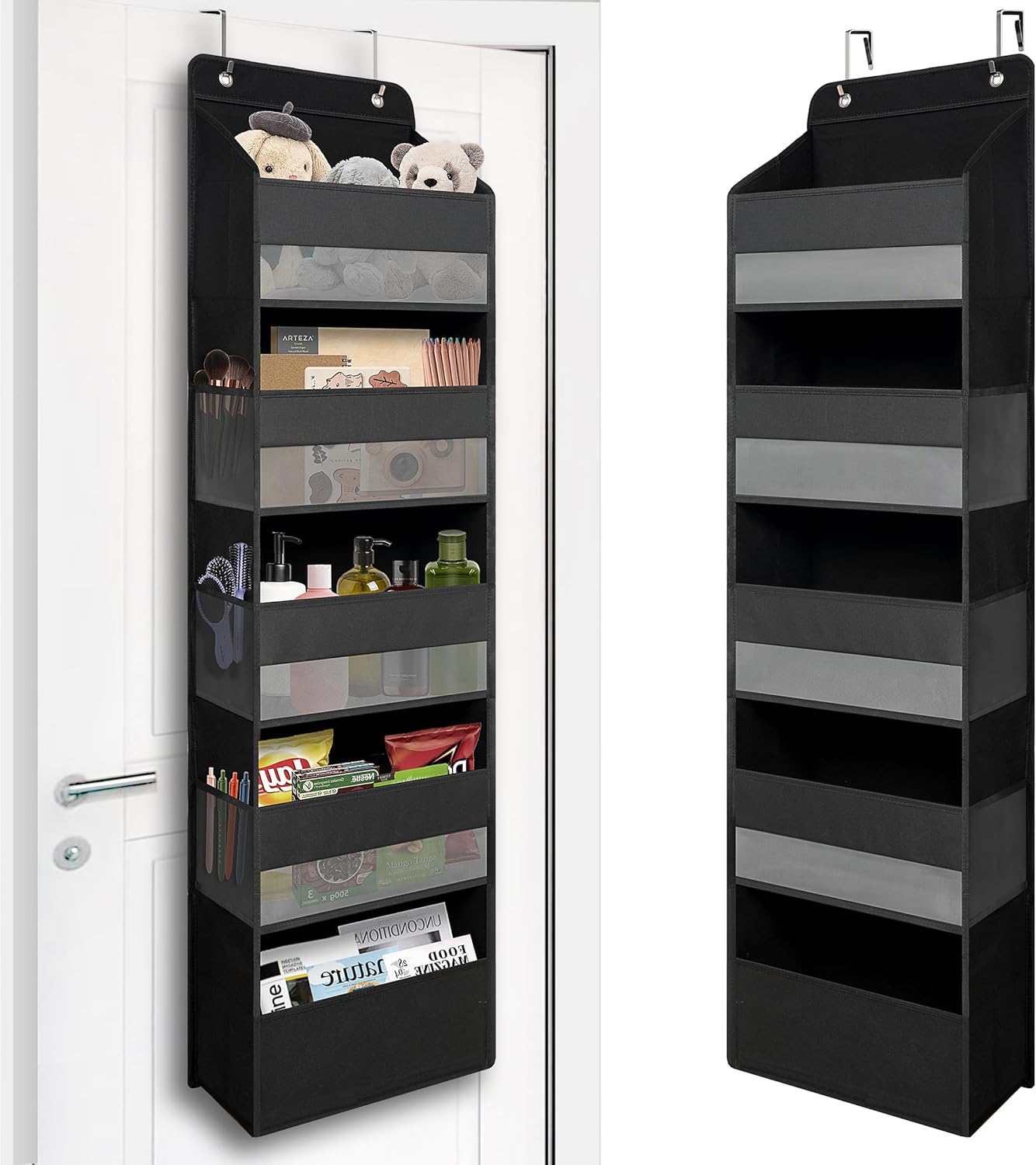
| More separated categories | TYMENSH 5-pocket / 11-compartment | 5 large clear-front pockets + 6 side mesh pockets. |
| Simple everyday dorm storage | Giraffe Creation classic 4-pocket | Easy setup for bathroom, bedroom, and closet items. |
| Small door or compact room | TYMENSH compact 4-pocket | Shorter-profile storage for daily essentials. |
| More visible pockets | Giraffe Creation 10-pocket double-row | More pocket sections behind one door. |
The pocket count matters because students usually store mixed categories in one small room.
A 4-pocket layout works when the student wants a few broad zones, such as toiletries, snacks, chargers, and closet overflow.
The 5-pocket layout adds six side mesh pockets, which helps separate smaller items from larger bottles, towels, snacks, and accessories.
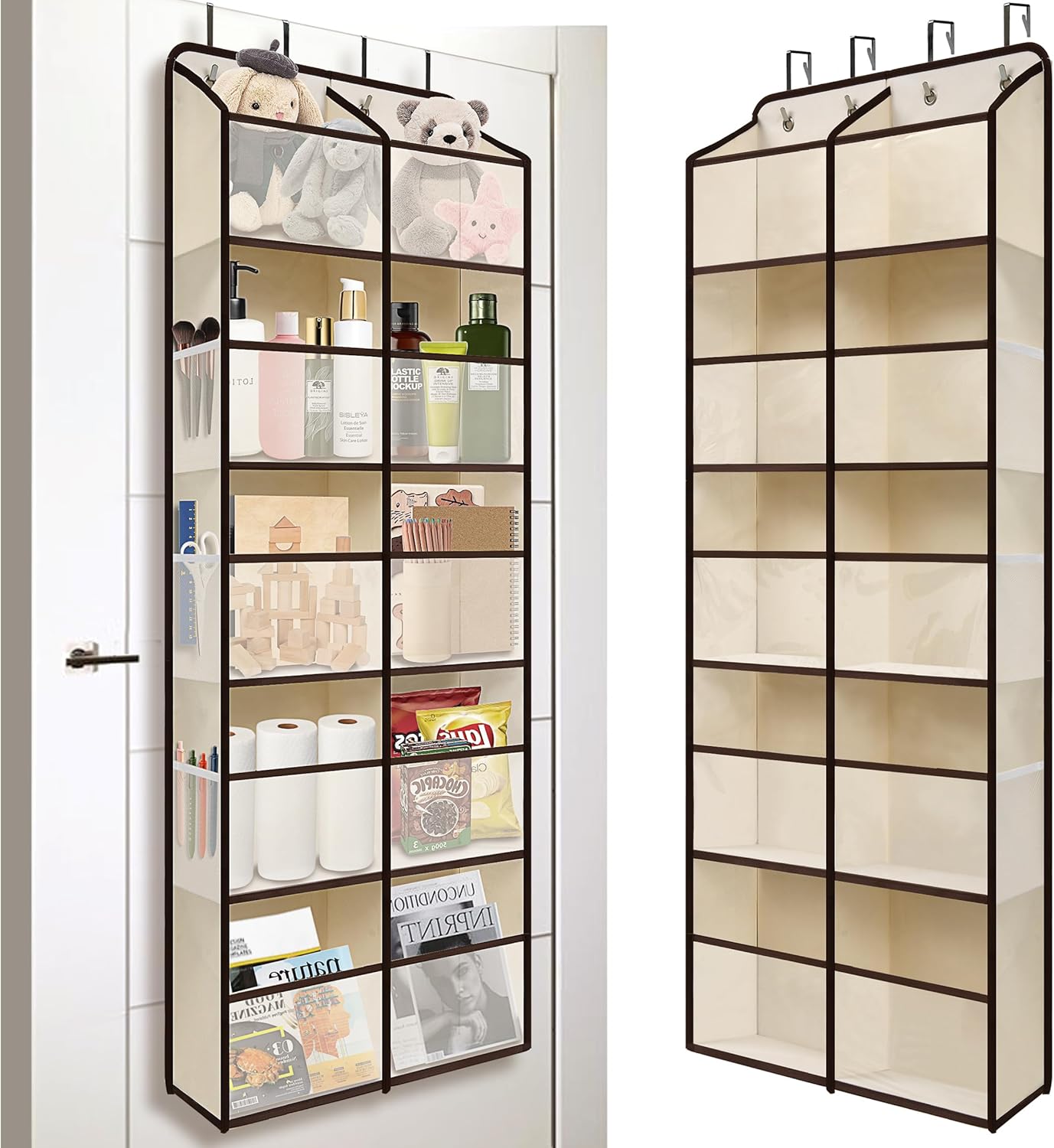
A 10-pocket double-row layout is useful when the student wants many visible sections behind one door, especially for shared rooms or larger packing lists.
These examples show how layout choice changes by routine.
If the organizer will hold shampoo, skincare, deodorant, towels, and hair accessories, clear-front pockets help the student identify items quickly. Side mesh pockets can be useful for small accessories that would otherwise sink into larger pockets.
Chargers, cables, tissues, snack bars, tea packets, pens, and hair ties are small enough to disappear on a desk. A pocket layout gives those items a repeatable place after class or before bed.
Socks, accessories, folded tees, lint rollers, and cleaning wipes are common overflow items when a dorm closet is small. A simpler 4-pocket layout may be enough when the student only needs a few broad zones.
In a shared room, visible sections can help separate personal care items, snacks, school supplies, and backup items. A 10-pocket double-row layout is worth comparing when many categories need to stay visible.
For students who sort items into more categories.
5 large clear-front pockets plus 6 side mesh pockets create 11 compartments for daily supplies. This layout is useful when the student wants larger items in the main pockets and smaller accessories in the side mesh pockets.
For simple, familiar dorm storage.
For small doors and simple routines.
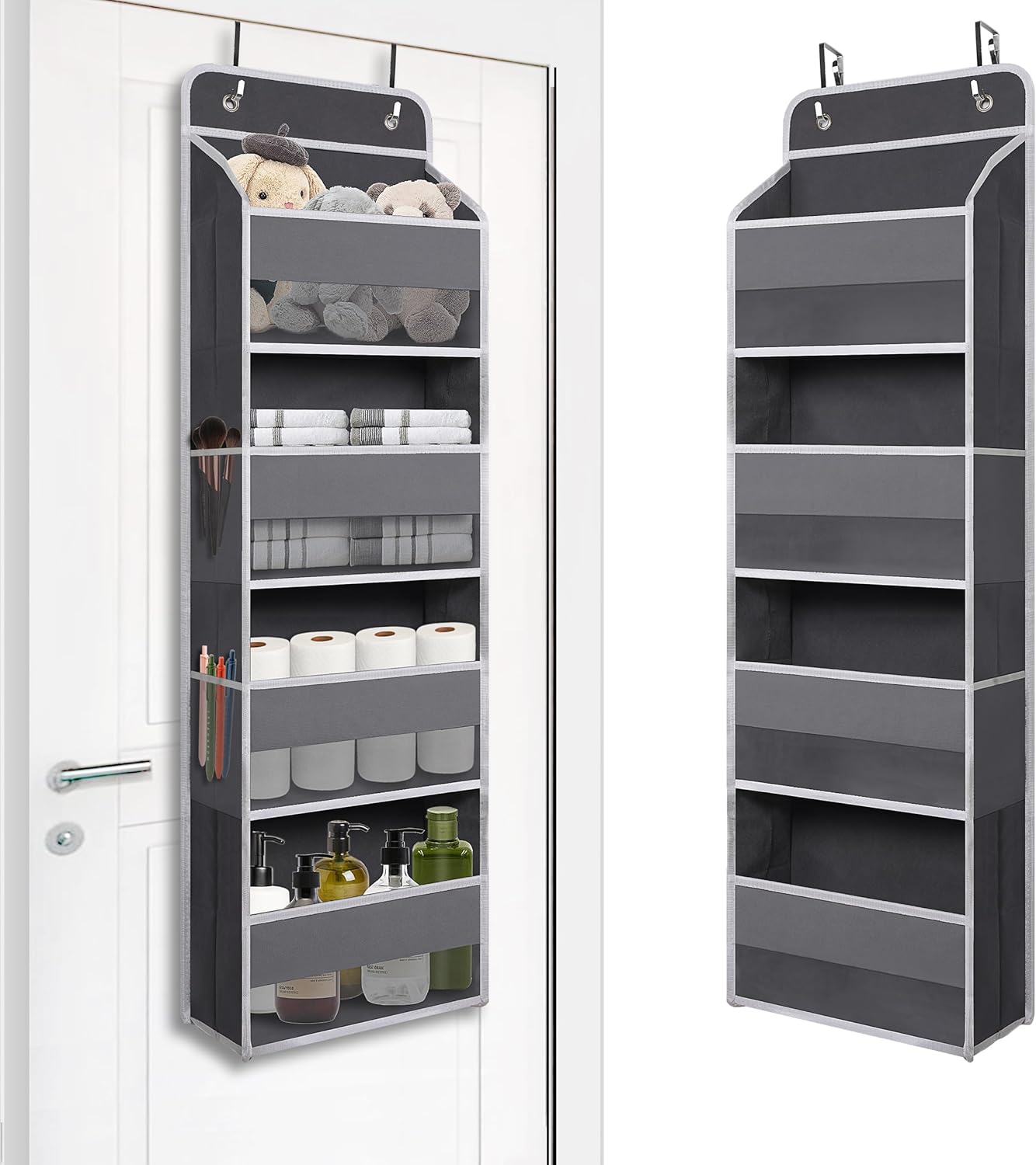
Four clear-front pockets for skincare, snacks, chargers, cosmetics, socks, and small accessories. This layout is worth comparing when the student wants door storage without choosing the taller multi-pocket formats.
For shared rooms and larger packing lists.
Use the guide to compare layouts, then confirm details on Amazon.
Use this line when comparing more separated storage categories for toiletries, snacks, chargers, accessories, towels, and daily supplies.
Use this line when comparing a simple four-zone organizer for bathroom, bedroom, closet, and everyday dorm items.
Use this line when comparing a smaller over-door layout for shared bathrooms, compact dorm rooms, and daily grab-and-go items.
Use this line when comparing more visible pocket sections for shared rooms, larger packing lists, and more item categories.
Check current price, availability, dimensions, and door clearance on the product listing.
Look at the organizer height, width, depth, and hook style. Also check whether the dorm door can close with over-door hooks installed.
Store larger bottles or heavier daily items lower when possible, and avoid treating any organizer as a substitute for a shelf unless the listing confirms capacity.
The safest way to compare these organizers is to treat the listed pocket count as a layout signal, not a promise about how much weight it should hold. Students should place larger bottles or heavier daily items lower when possible and avoid overfilling any pocket beyond what the listing supports.
Door clearance matters because dorm doors vary. Before ordering, students or parents should check the organizer dimensions, hook style, and whether the door can close with hooks installed. If a dorm has rules about over-door hooks, those rules should come before the product choice.