It uses unused vertical space
Door storage can hold small daily items without taking space from the floor, desk, bed, or closet shelf. That matters when the room already has a bed, desk, chair, and limited closet space.
Dorm storage notes
A practical way to think about bathroom items, desk items, closet overflow, and door storage.
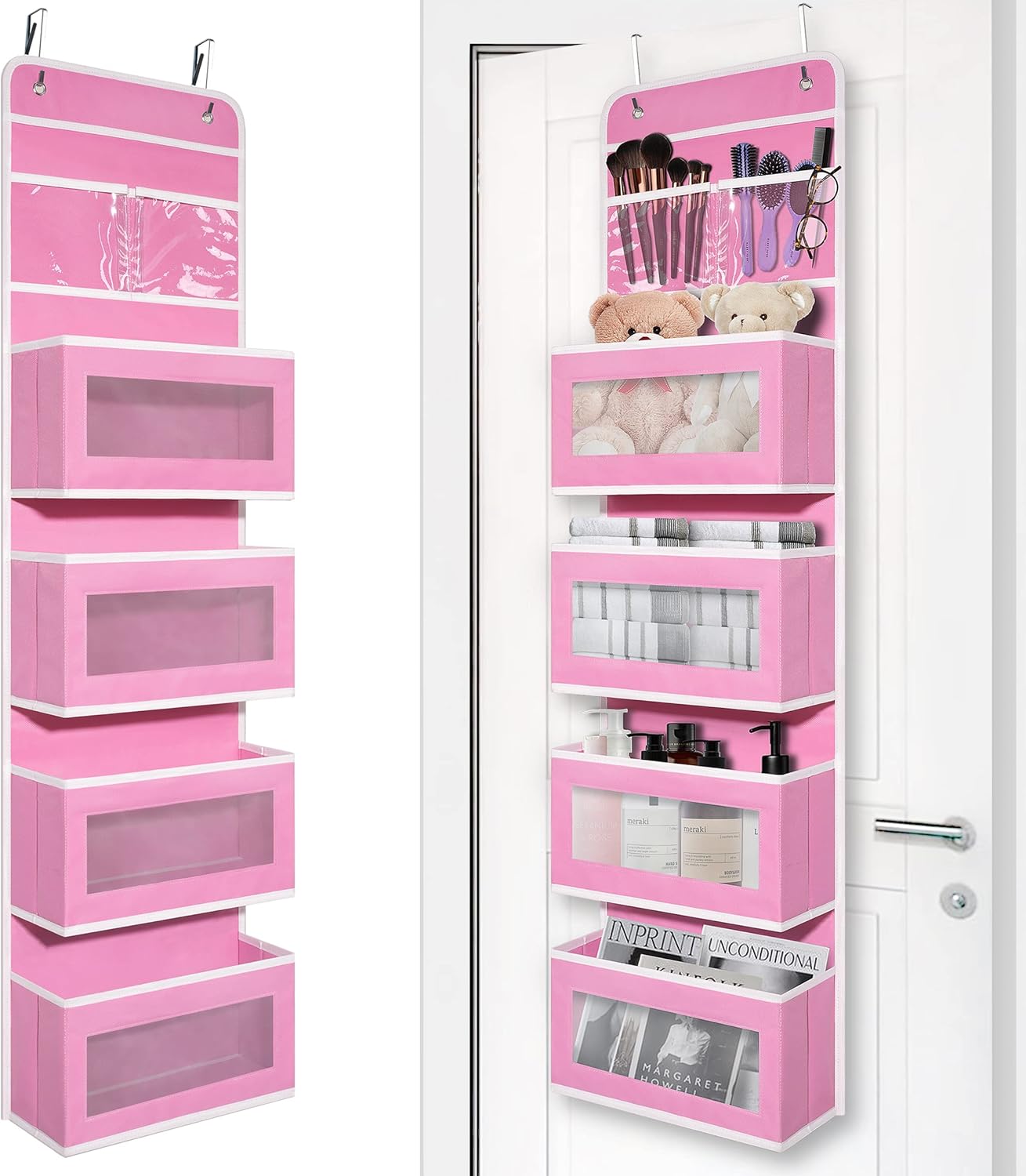
Small dorms need vertical storage first.
Dorm rooms often have limited furniture and shared routines.
Door storage can hold small daily items without taking space from the floor, desk, bed, or closet shelf. That matters when the room already has a bed, desk, chair, and limited closet space.
Students are more likely to keep a room organized when the storage matches daily routines: bathroom, class, snacks, laundry, cleaning, and getting ready.
Each idea matches a common dorm routine.
Store shampoo, skincare, deodorant, towels, wipes, and hair items together.
Give cables, power banks, snacks, tissues, and small supplies a pocket.
Good for socks, accessories, lint rollers, folded tees, and cleaning wipes.
Keep skincare, makeup, brushes, hair ties, clips, and small mirrors visible.
Make zones for bathroom, desk, snacks, laundry, and cleaning before unpacking.
Use 5-pocket for more categories, 4-pocket for simple storage, and 10-pocket for more visible pockets.
Grouping by routine is easier than trying to make every category exact.
Students do not need a perfect organizing system to benefit from door storage. The goal is to make the most common items easy to return to the same place. If a pocket becomes a mixed catch-all, split the routine into smaller zones such as “morning,” “class,” “snacks,” and “laundry.”
This routine-based approach is also easier during move-in. Instead of deciding where every single item belongs, the student can assign broad zones and adjust after the first week of classes.
Use this as a starting point, then check product details.
| Dorm Problem | Helpful Layout |
|---|---|
| Lots of toiletries, snacks, and chargers | TYMENSH 5-pocket / 11-compartment |
| Simple daily storage | Giraffe Creation classic 4-pocket |
| Small door or tight space | TYMENSH compact 4-pocket |
| Shared room or bigger list | Giraffe Creation 10-pocket double-row |